By Kris & Melanie Parsons, Dockside Travel
We’ve made port guides for cities all over the world. This one is different. St. John’s is home.
It’s absolutely beautiful here, the people are so friendly, and the history is rich — and most visitors have no idea how much you can actually do right off the ship. St. John’s is the oldest city in North America and the easternmost, a working harbour city shaped by the sea. If your cruise is calling here — likely on a Canada/New England run or a transatlantic repositioning toward Greenland, Iceland or Europe — this guide covers how the port day really works, what’s worth your limited hours, and what you can leave for next time. We know the city, we know the weather, and we know how spectacular a visit here can be. We also know you need a realistic plan, because some of the best attractions sit outside downtown, the city is hillier than most visitors expect, and Newfoundland weather can turn on a dime.
Is St. John’s Worth Getting Off the Ship?
Hands down — this is a full day ashore.
By the time you do an excursion to Signal Hill or Cape Spear, or both, you’ll also want to leave time to explore the rest of the city — the downtown waterfront, George Street, the shops and pubs. There is genuinely that much to see and do. The food and the hospitality are the icing on the cake. This isn’t a port that gets the hype of a Caribbean beach day, and that works in your favour: it’s a compact, walkable harbour city where the ship ties up right downtown, the big scenery is minutes away, and the history is real rather than staged for visitors.
One local quirk to plan around: St. John’s runs on Newfoundland Time — half an hour ahead of Atlantic, an hour and a half ahead of Eastern. Check whether your ship is on local time or holding the last port’s time so you don’t misjudge your all-aboard.
Arriving Through The Narrows
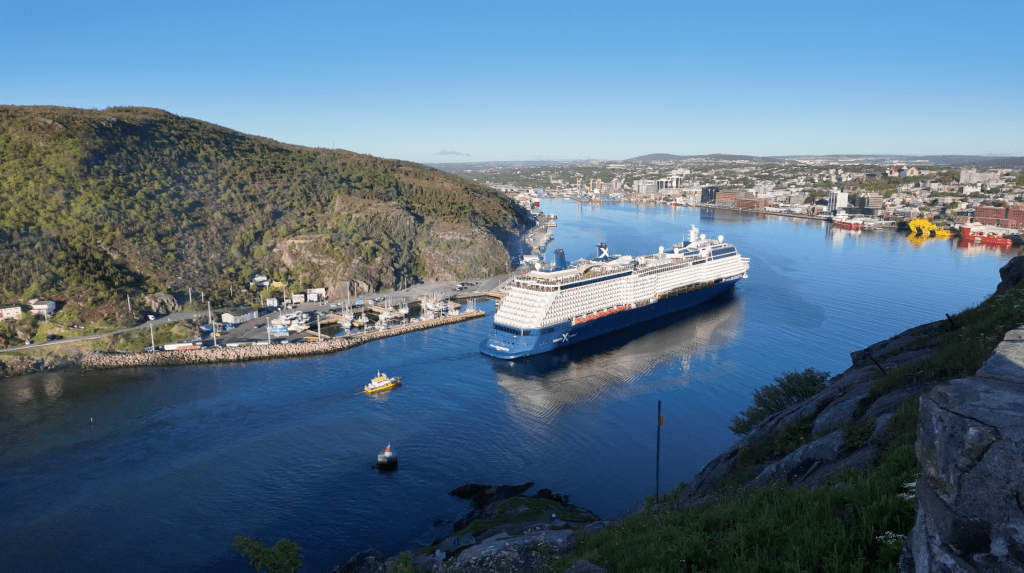
The approach is one of this port’s greatest attractions. Ships come in from the open North Atlantic and squeeze through The Narrows — the dramatic natural channel between the cliffs of Signal Hill on one side and Fort Amherst on the other — before the harbour and downtown suddenly open up ahead. It’s one of the best arrivals anywhere in cruising, so be out on deck well before the scheduled arrival time. This is not a port where you want to sleep through the sail-in.
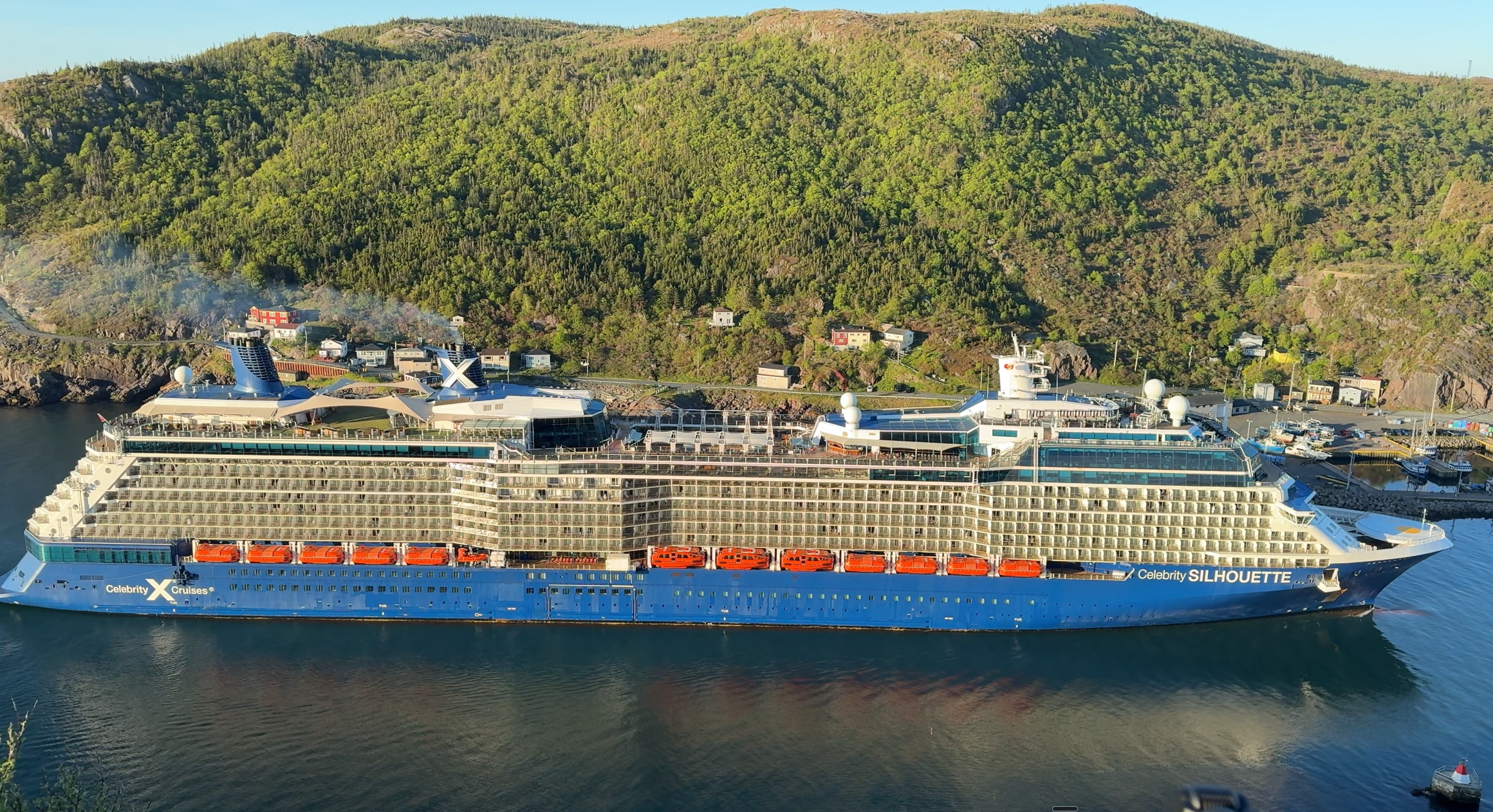
There are three completely different ways to experience that entrance: sailing through it on your ship, looking down over it from Signal Hill, and passing through it at water level on a local boat tour. Each one feels like a different place. The harbour is also a genuine working port — cruise ships share it with offshore-supply vessels, fishing boats and tour boats — and that working-waterfront character is a big part of the city’s identity.
Signal Hill and Cabot Tower
If you do one thing above the waterline, make it Signal Hill. It’s the attraction we’d put at the top of almost every first-timer’s list — sweeping views over downtown, The Narrows and the open Atlantic, crowned by Cabot Tower, with walking trails and remnants of the city’s military history around the summit. It’s also one of the best places on earth to watch a cruise ship thread The Narrows; from up there a ship can look impossibly close to the cliffs.
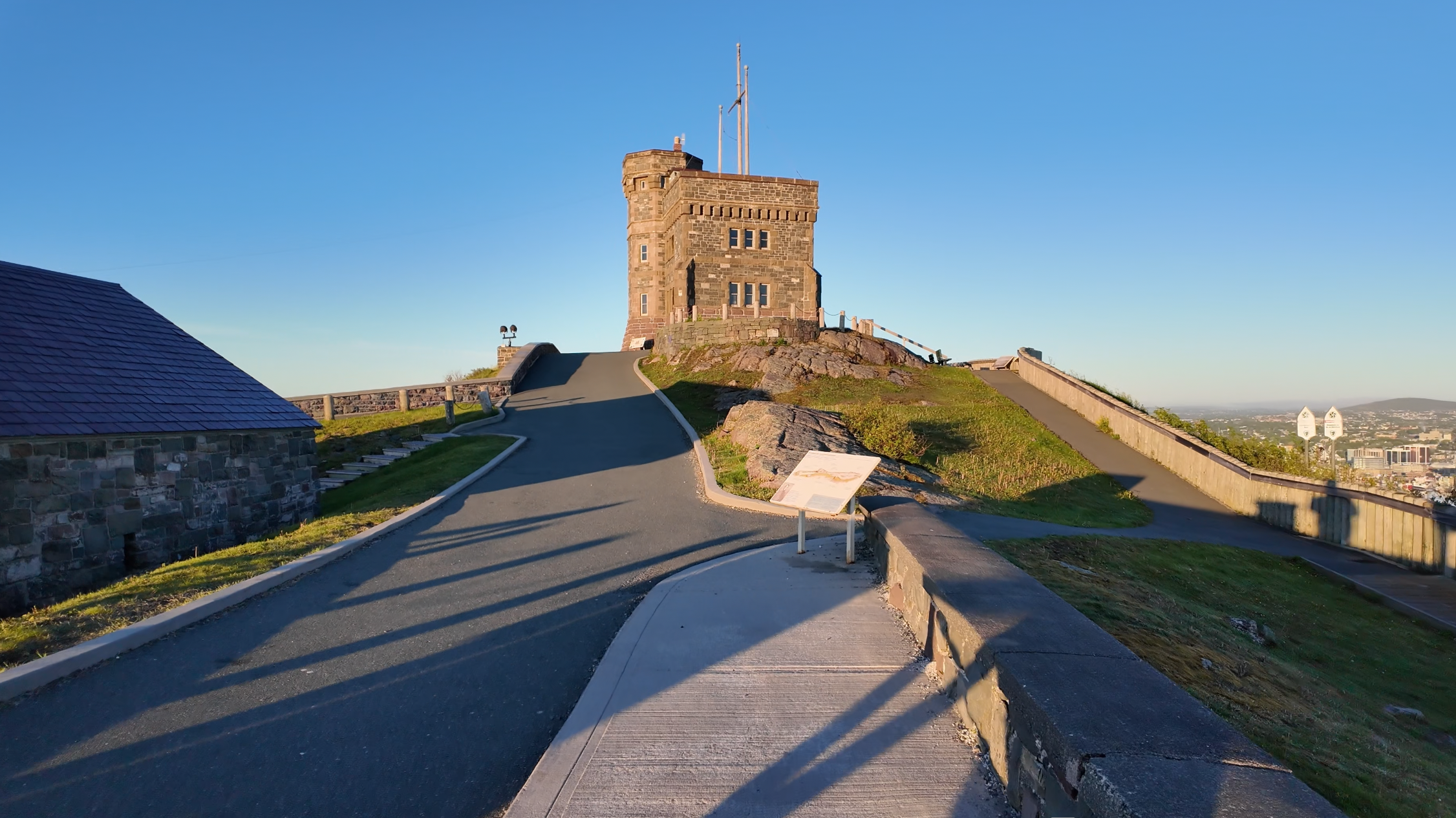
It’s about a ten-minute drive up from the downtown cruise area. You can walk it if you’re fit and have the time — roughly half an hour from downtown — but be warned, it’s steep. How steep? A professor at the local university, training to climb Everest, used to load up a heavy backpack and hike Signal Hill for practice. That tells you what you need to know. The trails here are some of the most well-used by locals, but for most cruise passengers on a clock, a taxi, shuttle or tour to the top — then exploring the summit on foot — is the smarter call. And the weather rewrites the experience: on a clear day the views are outstanding; on a foggy day it turns dramatic and atmospheric, but the long-distance views can vanish entirely.
Cape Spear — The Easternmost Point in North America
From Signal Hill, many visitors carry on to Cape Spear — for us, it ranks right behind Signal Hill as the place to go. It’s the easternmost point in North America (excluding Greenland): rugged cliffs, a historic lighthouse and a modern one, wartime gun batteries and bunkers you can walk through, and wide-open views where the ocean seems to stretch out forever. It also gives you the reverse angle — looking back toward Signal Hill from down the coast, which ties the whole geography together.
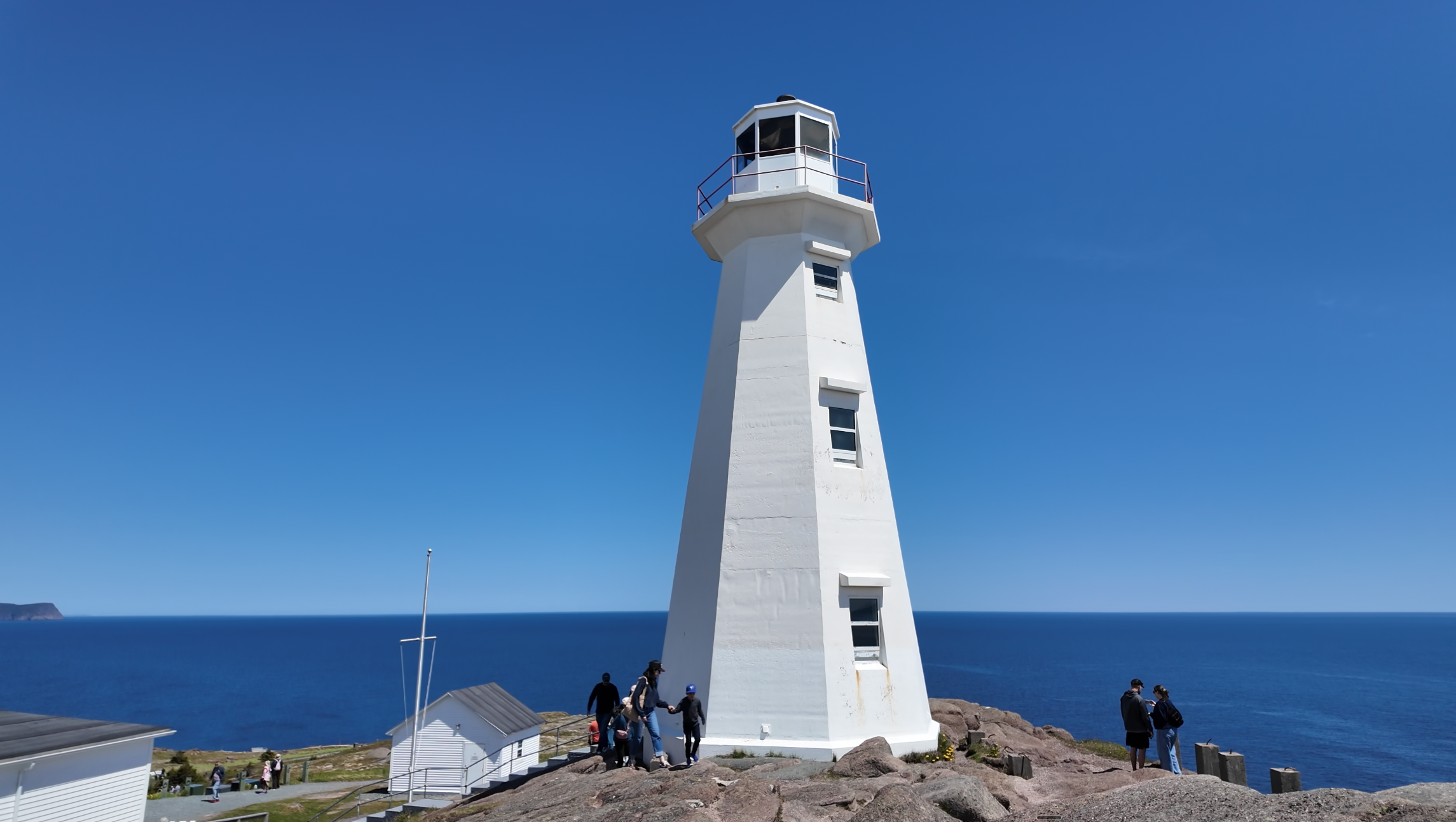
It sits outside the city, so you need transportation — budget about half an hour each way. Renting a car is possible but a bit of a logistical challenge for a port day, so realistically you’ll want a tour. The good news: most local sightseeing tours combine Signal Hill and Cape Spear into a three- to four-hour half-day, which is a very practical pairing for a first visit. The trade-off is time — a combined tour gives you the major views and history, but leaves less room for downtown, The Rooms or a boat tour.
Iceberg Quest and the View From the Water
After seeing St. John’s from above, one of the best ways to experience the same landscape is from the water. Iceberg Quest runs boat tours right from the downtown waterfront, which makes them convenient for cruise passengers when the schedule lines up with your time in port. The tour starts inside the harbour, heads out through The Narrows and into the open Atlantic — the same route your cruise ship takes, but from right down at water level, with Cabot Tower high above you and Fort Amherst across the way.
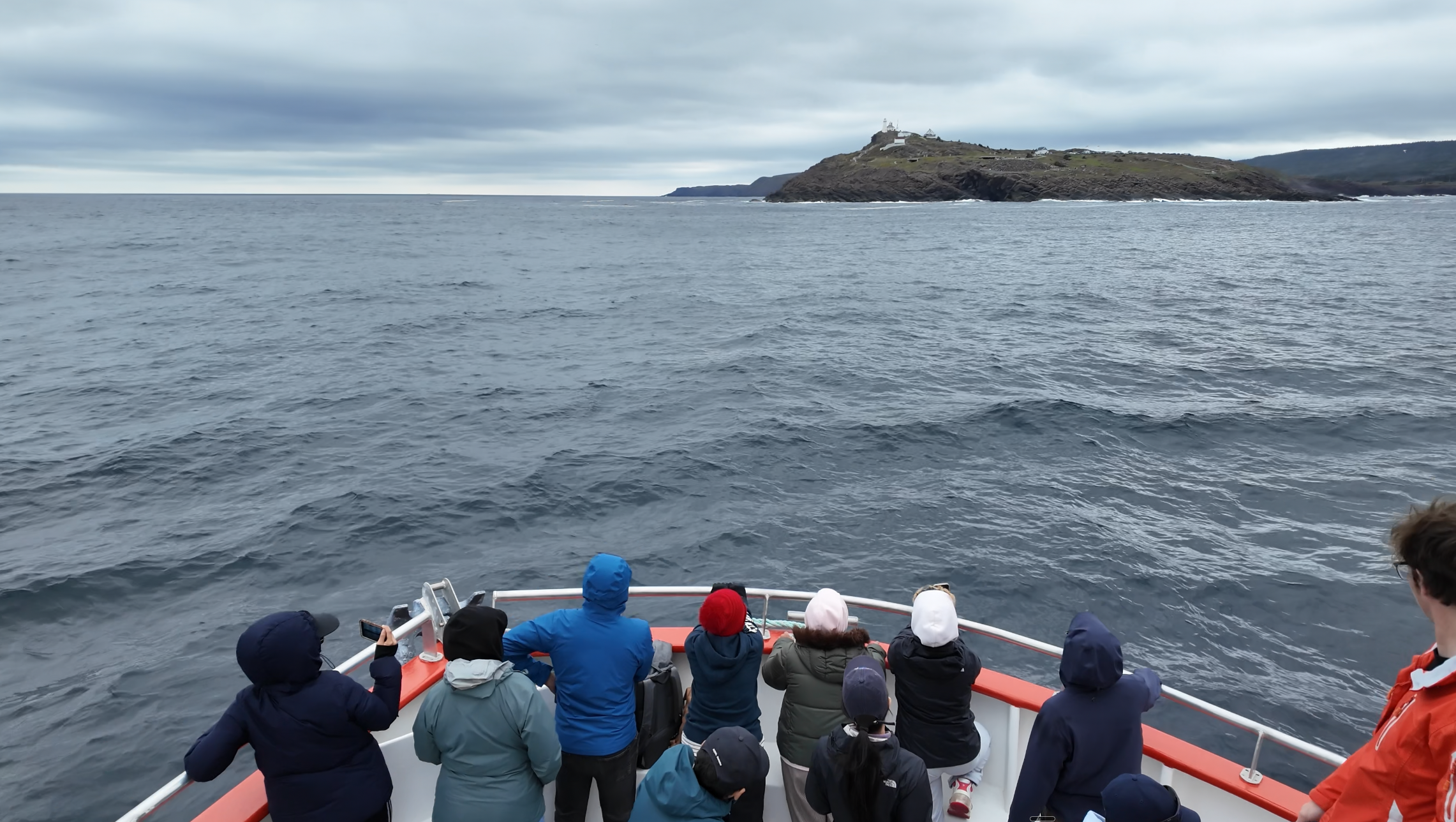
A note on what you’ll see: icebergs are usually early in the cruise season around St. John’s, and they’re never guaranteed. Whales, though, are a real possibility on a boat tour — we were lucky enough to see them on our trip. This is a strong option if you want coastal scenery and wildlife without spending much of your day travelling by road. Just remember the North Atlantic runs colder and rougher than the sheltered harbour — even when downtown feels mild, it can be windy and chilly on the water, so bring layers and expect some spray.
The Rooms
For the story behind the place — or for a day when the weather isn’t cooperating — The Rooms is one of the most important attractions in the city: the provincial museum, art gallery and archives under one striking modern roof. The exhibits cover Indigenous cultures, settlement, the fishery, the natural environment, art and military history — the best place going to understand that this province is much more than cliffs, lighthouses and colourful houses.
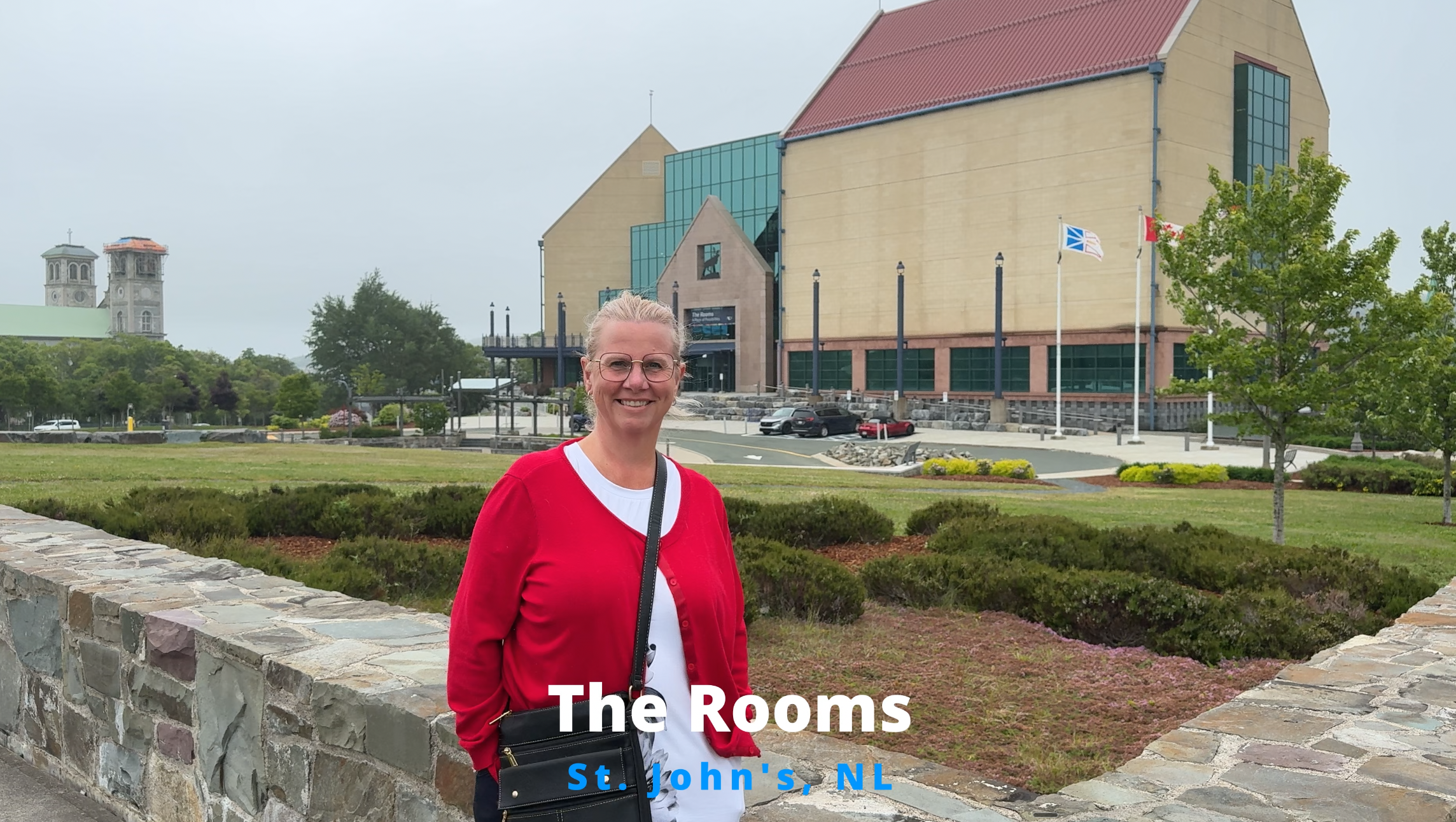
Here’s the honest bit: we’re from this province and have lived in the city for the last fifteen years, and we still had no idea how much there was to do at The Rooms. We’ve been a number of times and it’s genuinely worth going back to again and again. Don’t treat it only as a rainy-day backup — there’s enough here for several hours. It sits high above downtown, so the views over the harbour are excellent, but getting there is another climb; fit visitors can walk it, but a taxi is more practical if you’re maximizing your time. It works best as a major attraction on its own or paired with downtown, rather than crammed in alongside Signal Hill, Cape Spear and a boat tour.
Downtown St. John’s
Downtown deserves more than a quick walk-through — for most cruise passengers, this is where the day begins and ends, and that’s not a bad thing at all. The waterfront is the easiest area to explore on your own: a still-active harbour, real working-port energy, and the promenade where most of the boat tours depart. Walk along the water and take in Jellybean Row — the rows of houses painted every colour imaginable, the image the whole province is known for.

Just up from the water, Water Street runs parallel to the harbour, lined with restaurants, shops, cafés, pubs and the city’s most historic commercial buildings. In summer, part of it becomes the downtown pedestrian mall — outdoor patios, local shopping, a coffee or a pint, all walkable with no tour or taxi needed. Duckworth Street sits just above Water Street with even more restaurants and some of the most colourful architecture in the city. If you’re up for it, walking out through The Battery — the tiny cliffside fishing neighbourhood at the foot of Signal Hill — makes a great add-on to a Signal Hill trail hike.
One fair warning: St. John’s is built on a hill. The waterfront is level, but the streets rise sharply the moment you move away from the harbour, and what looks like a short walk on a map can turn into a serious climb. Comfortable footwear isn’t optional here — it’s essential. If you have any mobility concerns at all, grab a cab even for distances that look short.
Quidi Vidi Village
Just outside the downtown core, Quidi Vidi is a postcard — a tiny working fishing village tucked into a sheltered cove, with Quidi Vidi Lake nearby. Both are pretty spectacular, and they feel a world away from the city even though they’re only minutes from it. The main draw is Quidi Vidi Brewery, which is very well known and pours some great craft beers. It’s an easy short taxi trip and a lovely spot to stop.
George Street
A short walk from the waterfront, George Street is the city’s best-known entertainment strip — a compact street packed with pubs, bars, restaurants and live-music venues. Here’s what’s worth knowing on a cruise day: when a ship arrives in St. John’s, the whole city knows. Locals come downtown to see it, the pubs and restaurants open early, and the street comes alive in a way a regular weekday morning just doesn’t produce. It’s at its best from around noon on, which lines up nicely with cruisers coming back from Signal Hill or Cape Spear in the early afternoon. With most ships in port until five or six, you have real time to experience it, not just walk past.
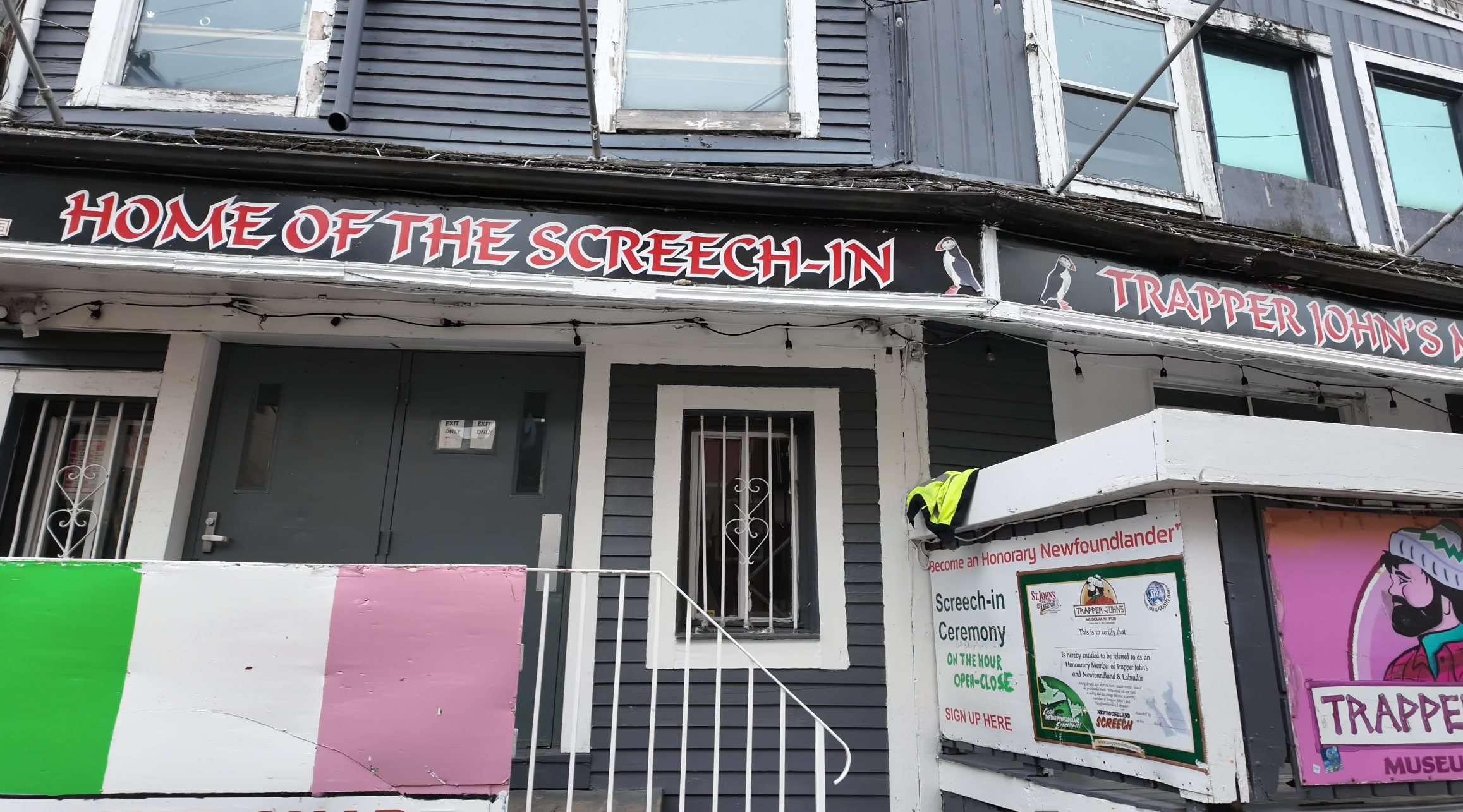
George Street is also one of the spots where visitors get introduced to Newfoundland traditions like the screech-in — the tongue-in-cheek ceremony that makes you an honorary Newfoundlander. It’s realistic to fit into a port day: a number of places downtown do it, and it’s best to book ahead online or take it in as part of an organized tour. It’s genuinely entertaining and a lot of fun — just be prepared to pucker up and kiss the cod.
Food, Drinks and Local Hospitality
St. John’s has an excellent run of restaurants, pubs and cafés within walking distance of the harbour — Newfoundland seafood, fish and chips, local craft beer and traditional dishes, alongside a growing crop of contemporary spots.
For fish and chips, try the Duke of Duckworth. Plenty of locals swear by Ches’s as the go-to fish-and-chips chain, but for us it’s somewhere like the Duke — or, for a proper seafood meal, the St. John’s Fish Exchange, which is a great spot. Downtown is also good for local artwork, crafts and Newfoundland-themed goods. And don’t be surprised if service here feels unusually personal — if someone calls you “dear,” “my love” or “darling,” that’s a friendly hello, not a marriage proposal.
How to Plan Your Day
The best itinerary depends on the length of your port call, the weather and the kind of day you want. Our biggest piece of advice: don’t try to do it all.
For a first visit, we’d prioritize Signal Hill and Cape Spear — they pair naturally as a half-day tour and give you the strongest introduction to the scenery, history and geography, and still get you back downtown with time for lunch, Water Street and George Street. If the weather isn’t great, The Rooms is an excellent call. If wildlife and coastal scenery are your thing, the boat tour through The Narrows pairs well with downtown since it leaves from right near the ship. And if you’d rather keep it simple and independent, just stay downtown — the waterfront, Water Street, the pedestrian mall, Duckworth Street and George Street, plus lunch and a local drink, make for a very enjoyable day with no transportation to arrange.
Trying to complete Signal Hill, Cape Spear, The Rooms, downtown and a boat tour in one call would be ambitious — technically possible on a long day, but it leaves no room for traffic, weather or actually enjoying the places you came to see. Choose one major experience or one strong pairing, then use downtown as the flexible part of your day.
Our Perfect Port Day in St. John’s
Watch the sail-in through The Narrows from the ship. After docking, take prearranged transportation up to Signal Hill before it gets busy, then continue to Cape Spear for the lighthouse, the wartime remains and the Atlantic views. Head back downtown for lunch, walk the pedestrian mall and George Street, and spend the rest of the day along the waterfront. For a longer visit, add either The Rooms or the Iceberg Quest boat tour — but probably not both, unless your ship has an especially long day in port. That gives you the major scenery, history and downtown atmosphere without turning the day into a race.
A Word on Weather and What to Wear
Newfoundland weather deserves its own mention, because it changes fast. A day can start foggy or drizzly and turn clear and sunny — or the exact opposite — and it can feel noticeably colder at Signal Hill, Cape Spear or out on the water than it does downtown. Bring a light waterproof layer even when rain isn’t forecast, wear comfortable walking shoes, and dress in layers you can add or shed through the day. Don’t automatically cancel plans because of fog — it often lifts, and the fog itself makes for dramatic Newfoundland atmosphere — but keep some flexibility when your plans depend on long-distance views or marine conditions.
Dockside Travel Port Ratings: St. John’s
| Category | Rating |
|---|---|
| Walkability | ⭐⭐⭐½ (3.5/5) |
| Friendliness | ⭐⭐⭐⭐⭐ (5/5) |
| Beaches | Not applicable |
| Amenities & options | ⭐⭐⭐⭐⭐ (5/5) |
| Safety & comfort | ⭐⭐⭐⭐⭐ (5/5) |
| Value for money | ⭐⭐⭐⭐⭐ (5/5) |
| Overall | ⭐⭐⭐⭐⭐ (5/5) |
Walkability (3.5/5): The downtown waterfront, Water Street, George Street and the pedestrian mall are easy to reach from the ship. But the hills are real, and Signal Hill, Cape Spear and The Rooms may need transportation depending on your mobility and time.
Friendliness (5/5): Newfoundland hospitality isn’t just a tourism slogan. People are welcoming, helpful and happy to talk with visitors — and being called “dear” or “my love” is usually just how someone says hello.

Beaches (not applicable): We’re not giving a numerical score here. There are beaches and coastal areas around the region, but this isn’t a conventional beach-day port. You come for cliffs, whales, history, fog and an ocean that looks slightly angry even when it’s having a good day.
Amenities & options (5/5): Explore independently, take a historical tour, visit museums, go whale watching, walk the coastline, enjoy local food or spend the day downtown — a strong variety of experiences for such a compact destination.
Safety & comfort (5/5): The main tourism areas feel safe and welcoming. The real concerns are practical ones — steep terrain, changing weather, ocean conditions, and leaving enough time to get back to the ship.
Value for money (5/5): A large part of downtown can be explored for free, and Signal Hill and Cape Spear deliver hours of sightseeing without high admission prices. Tours and boat trips add cost, but there are options for different budgets.
Overall (5/5): It doesn’t mean it’s perfect for every visitor — the weather is unpredictable, the hills are a challenge, and this isn’t a warm-weather destination. But few ports combine a dramatic sail-in, maritime history, rugged scenery, wildlife, culture, food and a walkable downtown this close to the ship. St. John’s doesn’t feel like a generic cruise stop. It feels unmistakably like Newfoundland — and that’s exactly why it earns a full five out of five.
St. John’s at a Glance
- Port type: Port of call (and occasional turnaround) — cruise berth right in downtown St. John’s harbour
- Getting there by ship: In through The Narrows between Signal Hill and Fort Amherst — be on deck for the arrival
- Walkable from the ship: Downtown waterfront, Water & Duckworth Streets, Jellybean Row, George Street; The Battery on foot as part of a Signal Hill hike
- Needs transport: Signal Hill summit (~10-min drive), Cape Spear (~30 min each way — tour recommended), The Rooms, Quidi Vidi Village (short taxi)
- Best pairing: Signal Hill + Cape Spear as a 3–4 hour half-day tour, then downtown
- Don’t miss: Fish and chips at the Duke of Duckworth, or seafood at the St. John’s Fish Exchange
- Seasonal: Icebergs early in the cruise season; whales possible on an Iceberg Quest boat tour
- Local quirk: Newfoundland Time — half an hour ahead of Atlantic; confirm your all-aboard
- Come prepared: Comfortable shoes for the hills and a light waterproof layer — the weather turns quickly
- Not to be confused with: Saint John, New Brunswick — a different city entirely. This is St. John’s, Newfoundland and Labrador.
Watch the Trailer
Kris and Melanie Parsons are a Canadian couple with 20+ years of cruising experience — dozens of sailings and nearly 300 nights at sea across Celebrity, Princess, Royal Caribbean, Virgin Voyages, Carnival and Norwegian. St. John’s, Newfoundland is home. Follow along on YouTube for weekly cruise port guides, ship tours and vlog content.